
Signs Your Load-Bearing Wall Needs Attention
A load bearing wall is any wall that carries structural weight from above — roof loads, floor loads, or both — and transfers that weight down to the foundation. In most Texas homes, exterior walls are load-bearing, and at least one or two interior walls run perpendicular to the floor joists to carry mid-span loads. When a load-bearing wall is under stress, it sends signals. Here's what to look for.
What Is a Load Bearing Wall in a House?
A load bearing wall supports the structural weight above it. Remove it without proper engineering, and the structure above can sag, crack, or in extreme cases fail. Non-load-bearing (partition) walls only divide space — they carry no structural load and can be removed more easily. The distinction matters enormously, which is why a licensed PE must assess any wall before removal.
Signs Your Load-Bearing Wall Needs Attention
Your house has a spine.
You probably don't think about it that way. You think about paint colors and kitchen backsplashes and whether that light fixture from Wayfair is going to look as good in person as it did on your phone at 11pm. But underneath all of it -- beneath the granite and the shiplap and the carefully curated gallery wall -- your home has a skeleton. And the load-bearing wall? That's the SPINE.
Just like your actual spine, you don't notice it when it's working. You stand up, you walk around, you carry groceries -- no thought required. But the MOMENT something goes wrong? Everything changes. Your whole world tilts. Suddenly, every movement hurts.
Your house works the same way. And right now, it might be trying to tell you something.
The Quiet Symptoms (That Aren't So Quiet)
Here's the thing about spinal injuries -- they rarely announce themselves with a dramatic collapse. They whisper first. A twinge here. A numbness there. A dull ache you convince yourself is "just sleeping wrong."
Your load-bearing walls whisper the same way. And if you know what to listen for, you can catch problems before they turn into the structural equivalent of a herniated disc.
Cracks in the wall are the most common whisper. Not the little hairline cracks that show up when your house settles in its first few years -- those are normal. Growing pains. We're talking about the OTHER kind. Vertical cracks that climb like lightning bolts. Diagonal fractures that spread across corners like fault lines. Cracks that seem to GET WIDER every time you look at them.
Those aren't cosmetic. Those are your house's nervous system sending distress signals.
"We noticed cracks forming above our doorway and thought it was just the house settling. Turns out the previous owners had done some unauthorized work on a load-bearing wall. Load Bearing Wall Pros came out and identified the issue immediately." -- Catherine Paneral, DFW
The difference between a harmless crack and a dangerous one? Direction and size. Hairline cracks that run horizontally along drywall seams are usually just tape joint issues. But vertical or diagonal cracks -- especially ones wider than a quarter-inch -- suggest the wall is under stress it wasn't designed to handle. Like asking your spine to carry a grand piano up three flights of stairs.
When Your Floors Start Telling Stories
Walk across your living room. Now pay attention -- REALLY pay attention. Does the floor feel level? Or is there a subtle dip near the center of the house? A slope you've gotten so used to that you don't even notice anymore?
Sagging or uneven floors above a load-bearing wall are like a limp. Your body compensates. You shift your weight. You adjust. But the underlying problem doesn't fix itself -- it gets worse.
When a load-bearing wall starts to fail, it can't hold up the floor system above it properly. The joists begin to deflect. The subfloor follows. And eventually, you've got a floor that rolls like a ship deck in a storm.
Here's a quick test: set a marble on the floor in the center of a room above where you think a load-bearing wall sits. If it rolls, you've got a conversation to have with a structural professional.
The Doors and Windows Are Lying to You
Your doors used to close perfectly. Now they stick. Your windows used to glide open with one hand. Now they fight you like they've got a personal grudge.
You blame humidity. You blame the Texas heat. You blame the kids for slamming things too hard.
But here's the truth: when a load-bearing wall shifts, it torques EVERYTHING around it. Door frames twist. Window frames compress. The geometry of your house -- which was built to be square and plumb -- starts going crooked.
It's like when your spine is out of alignment and suddenly your hip hurts, your shoulder aches, and your knee gives out on stairs. The problem isn't in those joints. The problem is in the SPINE.
"Our doors started sticking and we assumed it was just our old house being quirky. Turns out we had a structural issue with a load-bearing wall that was slowly shifting. The team at LBWP diagnosed it in about twenty minutes." -- Roy Brown, Dallas
If multiple doors and windows in the same area of your home are acting up simultaneously, stop blaming the weather. Start looking at the wall.
Mind the Gap
No, not the London Underground kind. The kind between your wall and your ceiling.
When a load-bearing wall starts to bow, buckle, or shift, it can physically pull away from the ceiling or floor above it. You'll see gaps -- sometimes thin as a credit card, sometimes wide enough to stick your finger in.
These gaps are your house literally SEPARATING. The skeleton is coming apart at the joints. And once those gaps open up, they invite moisture, pests, and about fourteen other problems you DON'T want.
Think of it like a vertebra slipping out of place. The disc compresses, the nerve gets pinched, and suddenly you've got cascading failures throughout the system. That gap between your wall and ceiling is the structural equivalent of a slipped disc.
The Wall That's Trying to Escape
If your wall is visibly bowing or bulging outward, this isn't a whisper anymore. This is a SCREAM.
A bulging wall means the wall can no longer handle the compression load above it. It's buckling. And unlike a lot of structural issues that develop slowly over years, a bulging wall can go from "that looks weird" to catastrophic failure in a disturbingly short timeline.
This is most common in masonry walls -- brick, block, or concrete -- where the rigid material shows the deformation clearly. But it can happen in framed walls too, where you'll notice the drywall pushing outward or studs that are visibly bent.
If you see this, don't wait. Don't "keep an eye on it." Don't plan to deal with it next month. Call someone TODAY. At Load Bearing Wall Pros, we've responded to emergency calls where homeowners caught a bowing wall just in time -- and calls where they waited too long. The difference between those two stories is not one you want to learn firsthand.
Your House Is Talking in Its Sleep
Every house makes noise. The refrigerator hums. The AC kicks on. The foundation settles with a gentle pop when temperatures change.
But there's a difference between a house that's stretching and a house that's STRAINING.
Creaking and popping sounds that concentrate around a specific wall -- especially sounds that seem to come from INSIDE the wall -- can indicate structural stress. Nails pulling out of studs. Framing members shifting under load. Wood fibers cracking under compression.
It's like hearing your spine crack when you stand up in the morning. Once in a while? Normal. Every single time, getting louder? Time for an X-ray.
"I kept hearing this creaking sound near our kitchen wall at night. My husband said it was nothing. I called LBWP anyway. Turns out the wall had been compromised by previous water damage and was slowly failing. They caught it before it became a real problem." -- Nicole Reeves, Plano
The Silent Killer: Water
If structural failure is a heart attack, water damage is high cholesterol. It works quietly, invisibly, over months and years -- eating away at your wall's strength from the inside out.
Water gets into load-bearing walls through roof leaks, plumbing failures, poor grading, or even condensation. Once inside, it rots wood, corrodes metal fasteners, and weakens the wall's ability to carry load. And because the damage happens INSIDE the wall cavity, you might not see it until the wall has already lost significant structural capacity.
Warning signs: discolored patches on the wall, bubbling or peeling paint, a musty smell that won't go away no matter how many candles you light. If you see any of these near a load-bearing wall, don't assume it's just cosmetic. The wall's skeleton might be dissolving behind that drywall.
It's Not Always the Wall -- Sometimes It's the Foundation
Sometimes the spine is fine. It's the PELVIS that's the problem.
If your foundation shifts, sinks, or cracks, it can throw off every load-bearing wall in the house. The walls didn't fail -- the thing they were standing ON failed. And the symptoms look almost identical: cracks, sticking doors, uneven floors, gaps.
Texas soil is notorious for this. The clay-heavy ground in DFW, Houston, and Austin expands and contracts with moisture levels like a sponge. One wet season followed by a drought, and your foundation can move enough to stress every structural member in the house.
So if you're seeing multiple symptoms across SEVERAL walls -- not just one -- the foundation might be the root cause. Get both checked.
When to Stop Googling and Start Calling
Look, we get it. You're reading this article because something doesn't feel right about your house, and you want to know if it's serious or if you're overreacting.
Here's the rule: if you noticed it, it's worth checking.
Load-bearing wall issues don't get better on their own. They don't heal. They're not going to work themselves out over the weekend. Every day you wait is a day the problem gets slightly worse and slightly more expensive to fix.
Load Bearing Wall Pros has been doing this since 2015. Over 12,000 walls. 4.9 stars. We've seen every version of "I should have called sooner" that exists. Don't be another one.
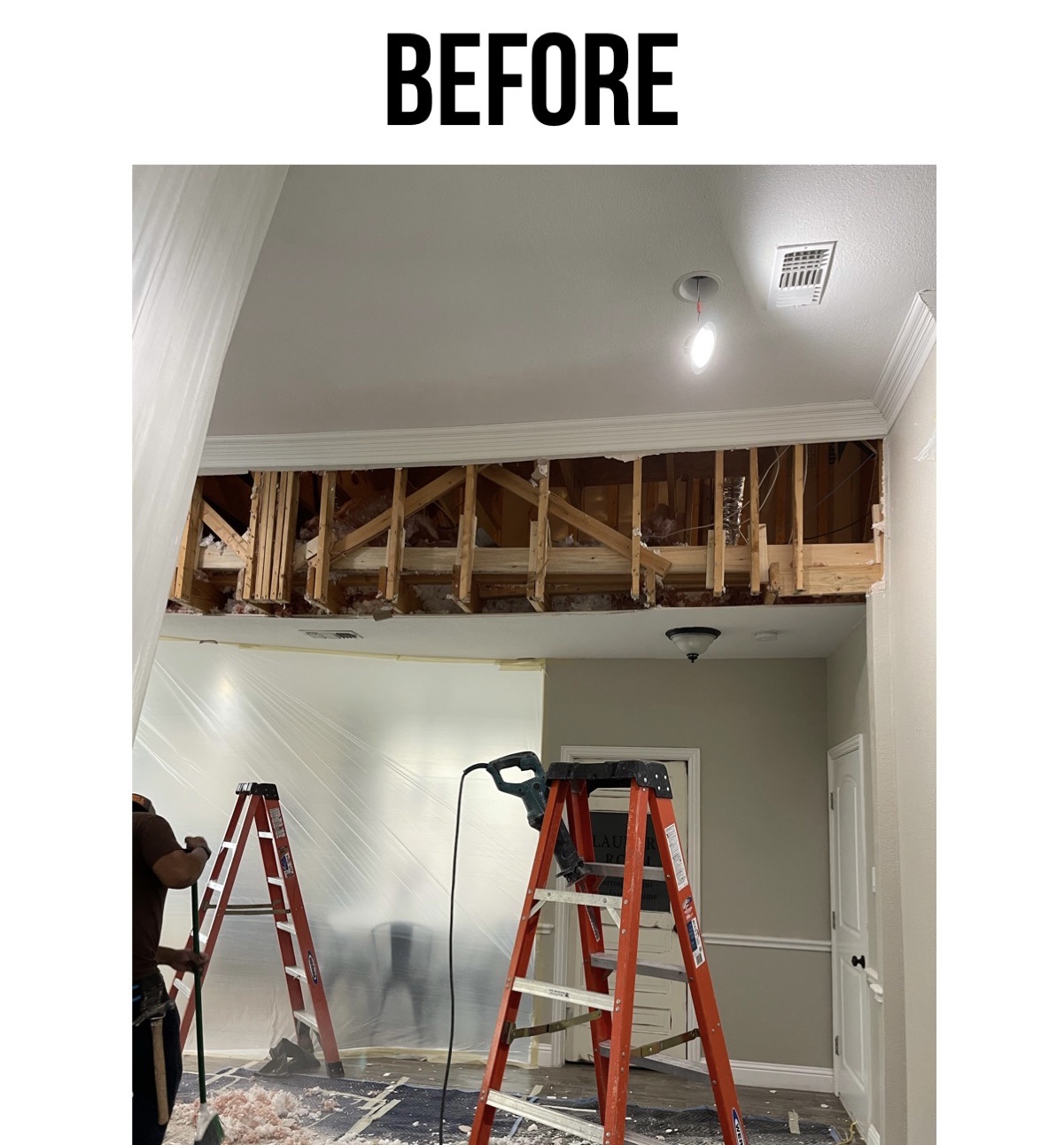
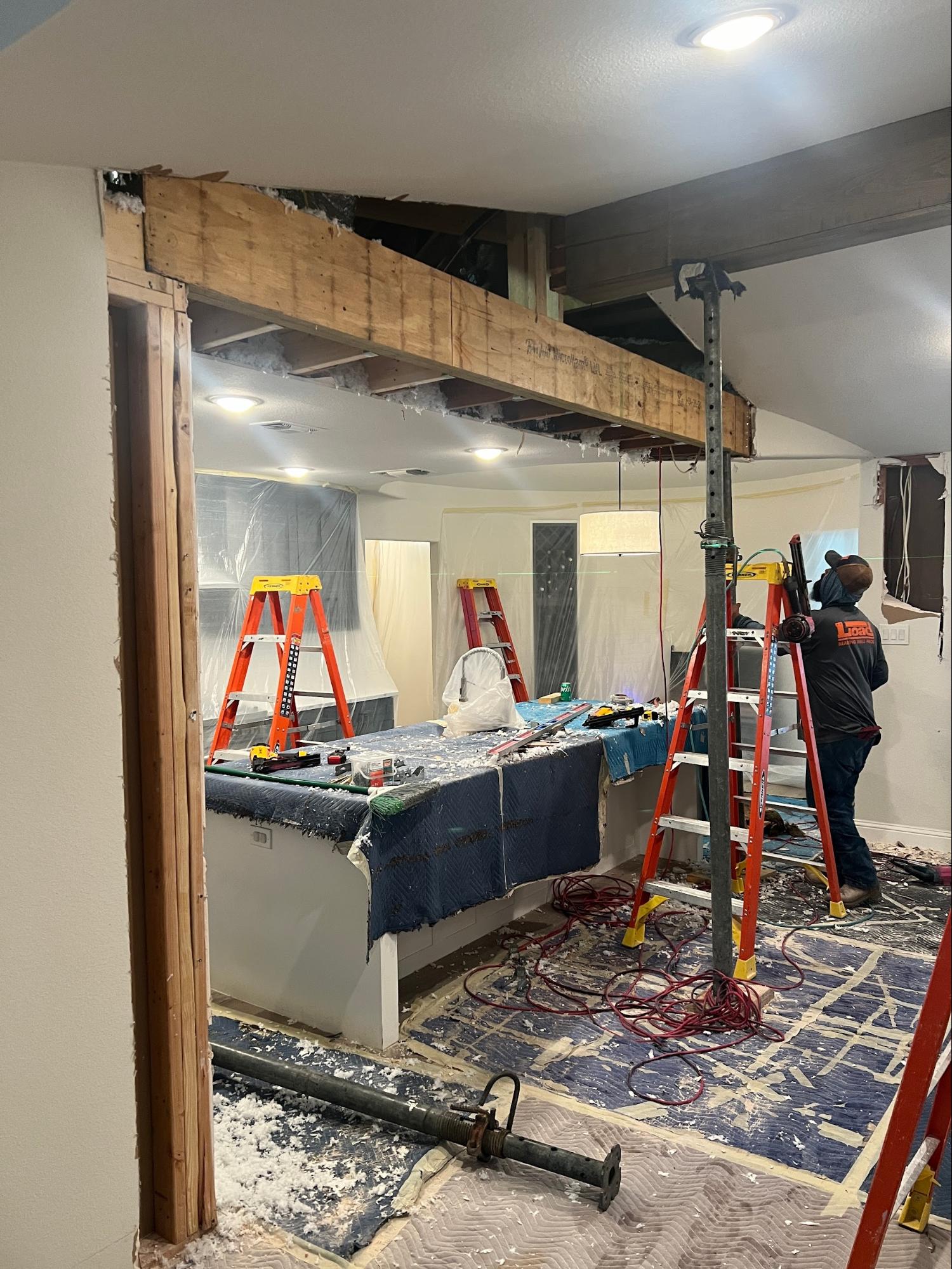
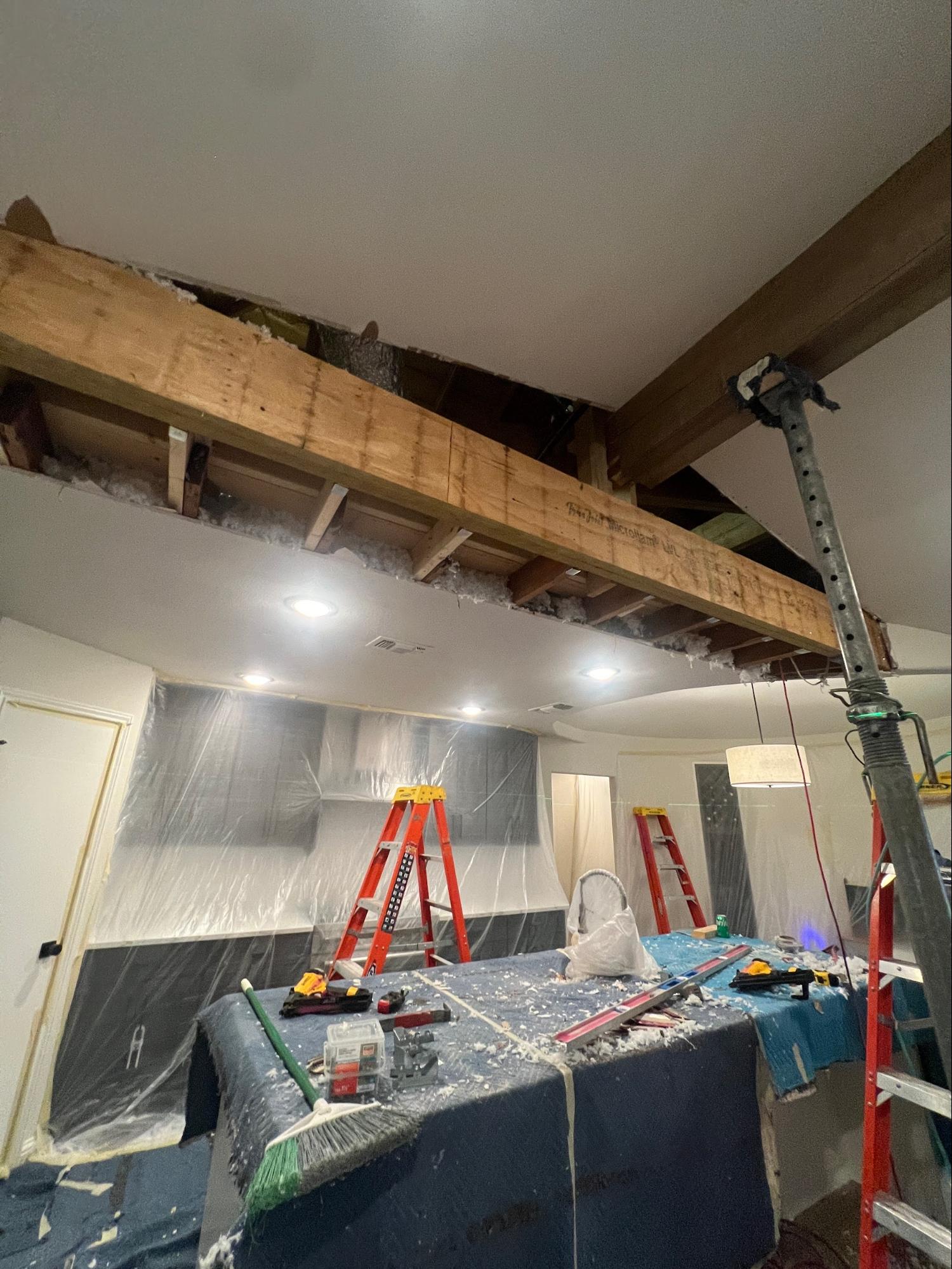
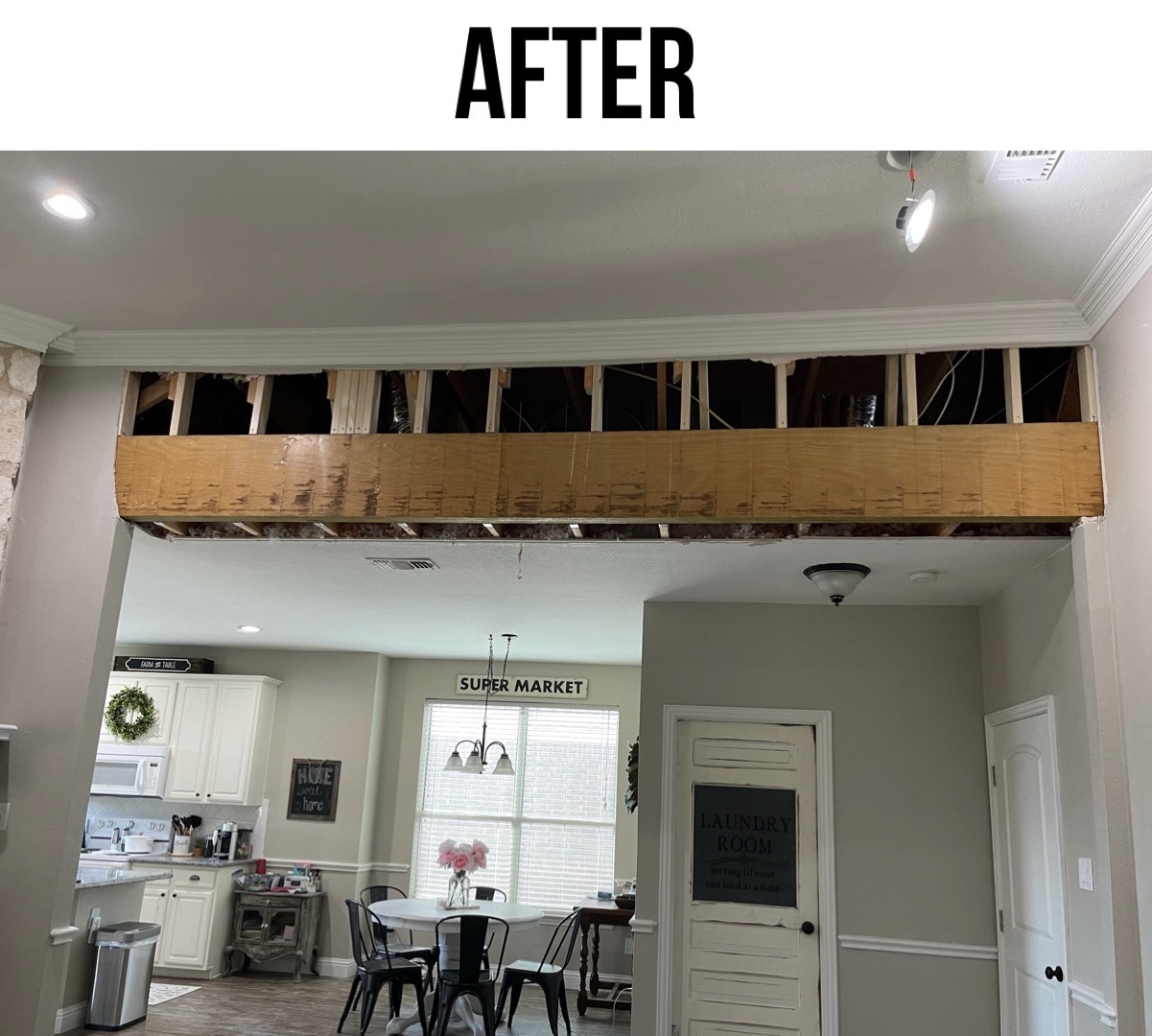
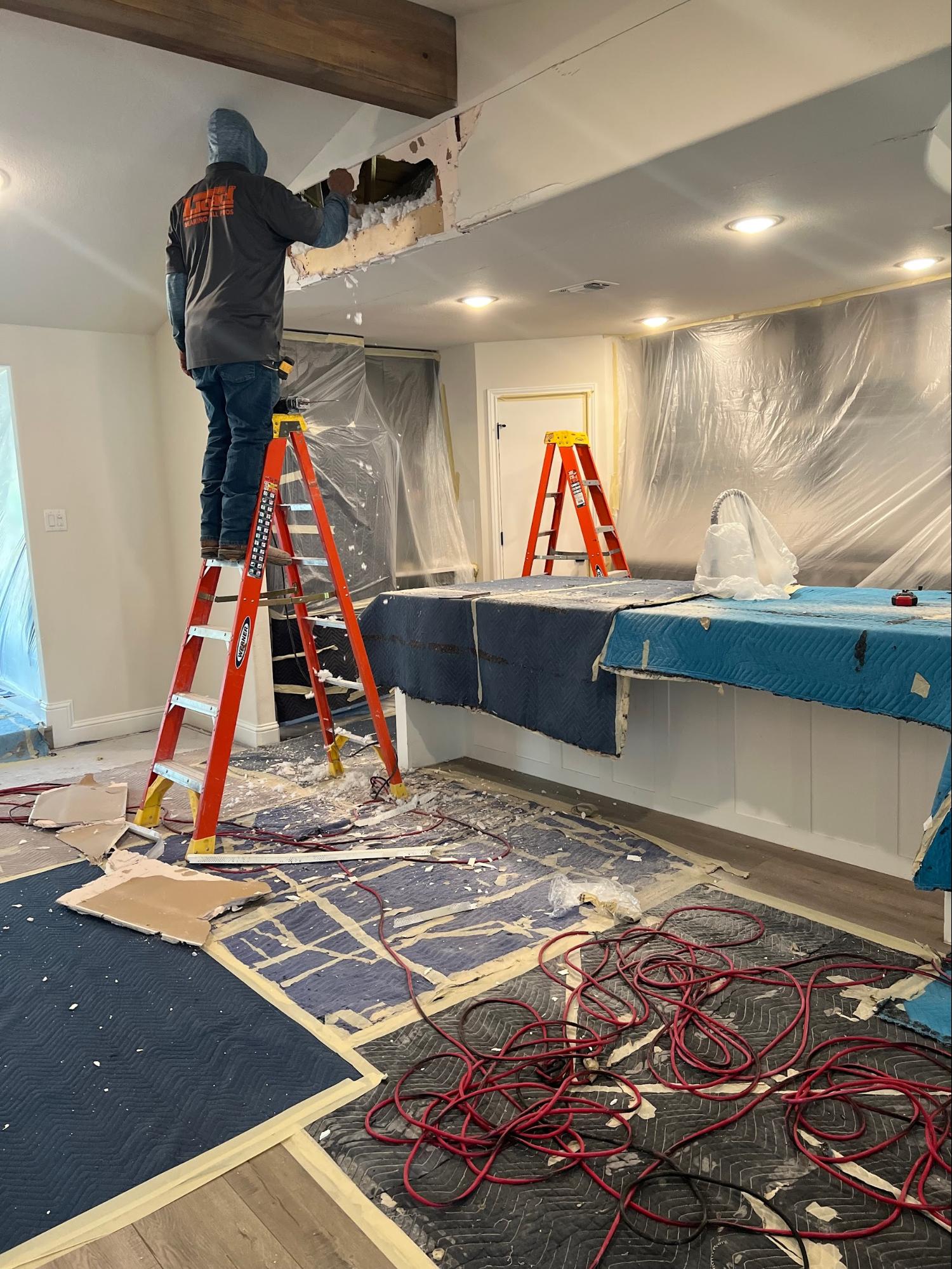
⭐️⭐️⭐️⭐️⭐️ "We hired Load Bearing Walls to knock down some walls and demo much of this house. Here are some before, during, and after pics. Jason, Jared, Jordan and Eli were great to work with!" -- Jenny Acree, Plano
FAQ
What's the most common sign of a load-bearing wall problem?
Cracks -- specifically vertical or diagonal cracks that grow over time. They indicate the wall is under more stress than it was designed to handle.
Can I fix a load-bearing wall issue myself?
No. Load-bearing wall repair is structural engineering territory. A wrong move can compromise your entire home. Always work with qualified professionals.
How much does it cost to repair a load-bearing wall?
It depends on the severity. Early-stage issues caught quickly are significantly less expensive than advanced structural failures. That's why we always say: call sooner, not later.
Will my homeowner's insurance cover load-bearing wall repairs?
It depends on the cause. Sudden damage (like a tree falling) is often covered. Gradual deterioration usually isn't. Check your specific policy.
How do I know if the problem is the wall or the foundation?
If symptoms appear across multiple walls throughout the house, it's likely foundation-related. If symptoms concentrate around one wall, that wall is probably the culprit. A professional can confirm either way.
---
Your home's spine deserves the same attention you'd give your own. Don't wait for the collapse -- catch it at the crack. Call Load Bearing Wall Pros at 469-813-8143 (DFW), 713-322-3908 (Houston), or 512-641-9555 (Austin), or hit us up through our contact form.