
Seismic Retrofitting for Load Bearing Walls in Texas Homes
4137 | Slug: seismic-retrofitting-for-load-bearing-walls-in-texas-homes---
Your house is a castle.
Not the fairy tale kind with turrets and a moat -- although if you're in Highland Park, honestly, some of those homes come close. No, your house is a REAL castle. The kind people actually lived in. The kind that was built to protect everything inside it from everything outside it: weather, intruders, time, and forces you can't control.
For centuries, castles survived because their builders understood something fundamental: you don't build for the threats you EXPECT. You build for the threats you CAN'T predict. The best castles weren't the ones with the thickest walls -- they were the ones with the smartest engineering. Walls that could FLEX under siege. Foundations that absorbed impact instead of cracking. Connections between stones that held tight when the ground shook.
Texas homeowners tend to think earthquakes are a California problem. That's like a medieval lord saying, "Siege warfare is a French problem." Until the army shows up at YOUR gate.
And in Texas? The army has been showing up more often than most people realize.
The Threat Nobody Talks About
Between 2008 and 2025, the USGS recorded thousands of seismic events across Texas. The DFW area alone experienced a cluster of earthquakes in the 2.0-4.0 magnitude range -- enough to crack foundations, shift framing, and stress connections in homes that were never designed to move.
Most of these quakes are linked to induced seismicity -- oil and gas extraction, wastewater injection wells -- but the effect on your house doesn't care about the CAUSE. A 3.5 magnitude tremor doesn't check whether it was triggered by a fault line or a wellhead before it shakes your foundation.
And here's the kicker: Texas building codes -- particularly for residential construction built before the 1990s -- didn't require seismic design considerations. Your castle was built to handle gravity loads (the weight of the house pushing straight down) and wind loads (Texas storms pushing sideways). But SEISMIC loads? The short, sharp, lateral jolts that shake a house like a dog shaking off water? Nobody planned for those.
That's like building a castle with eight-foot walls and no gate. You defended against arrows and forgot about the battering ram.
"These guys definitely know what they are doing. After having them install 2 beams in my 1930's era home, I am confident they know their business and can solve any problem." -- Tim Tiernan
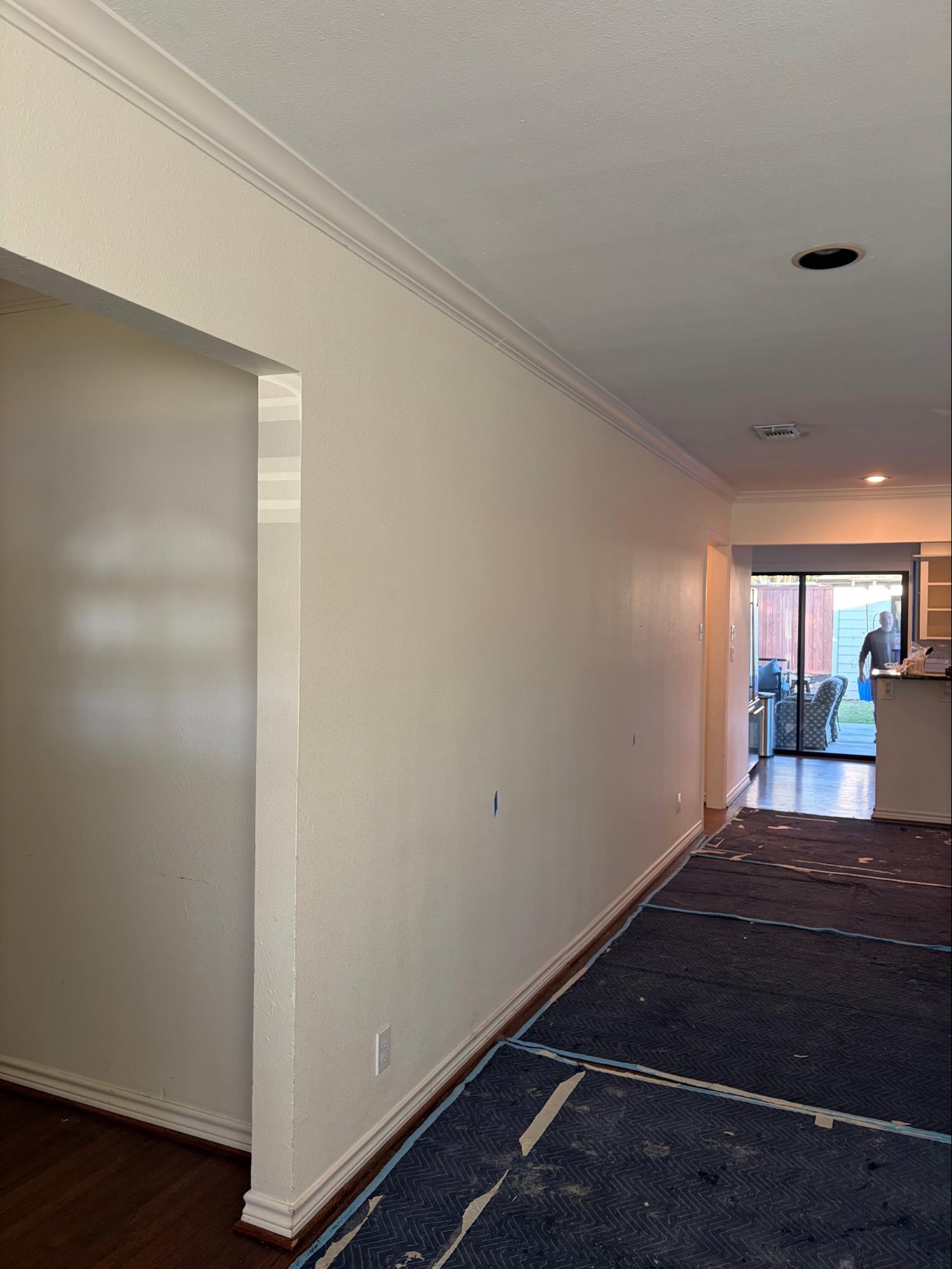
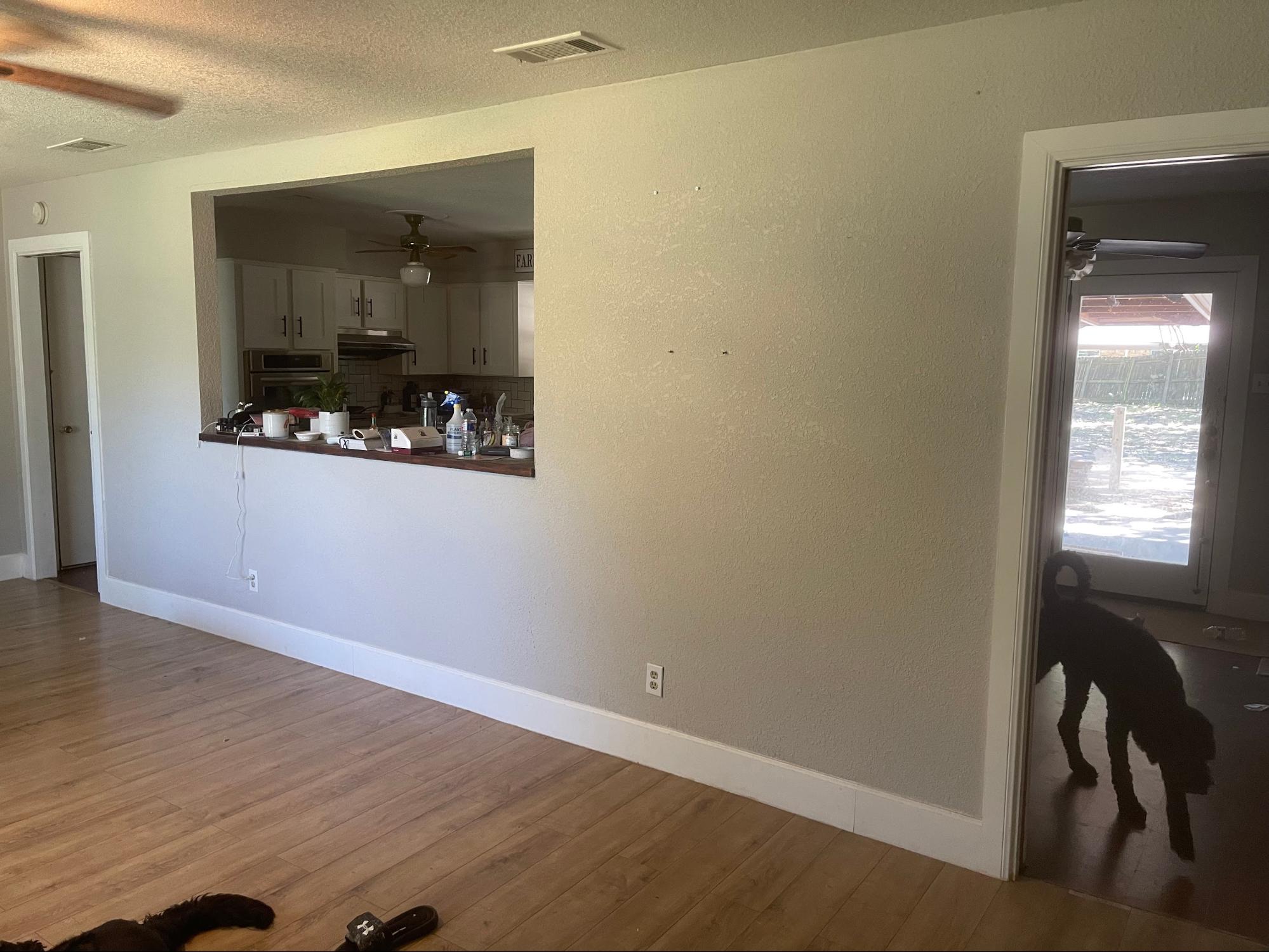
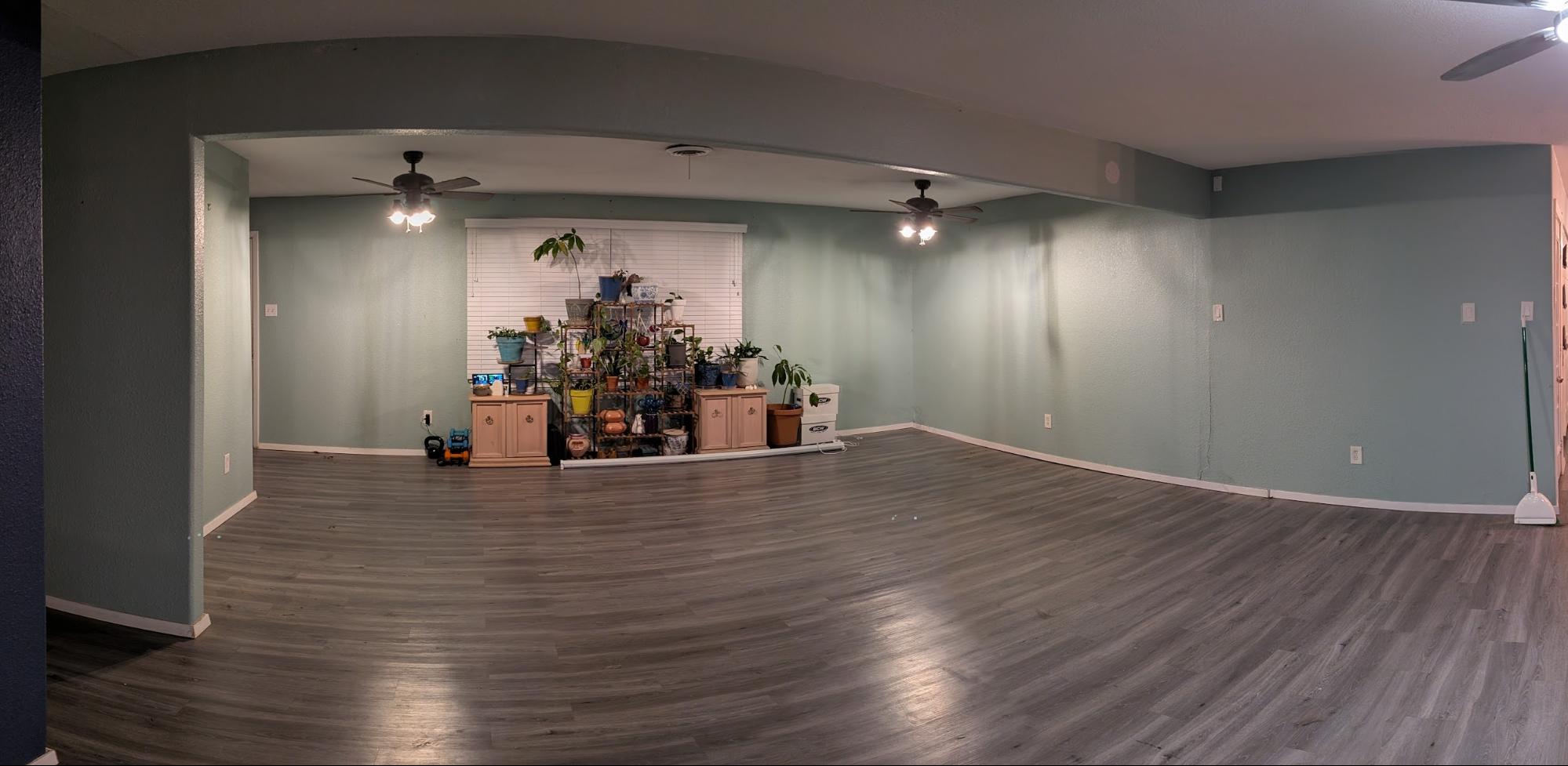
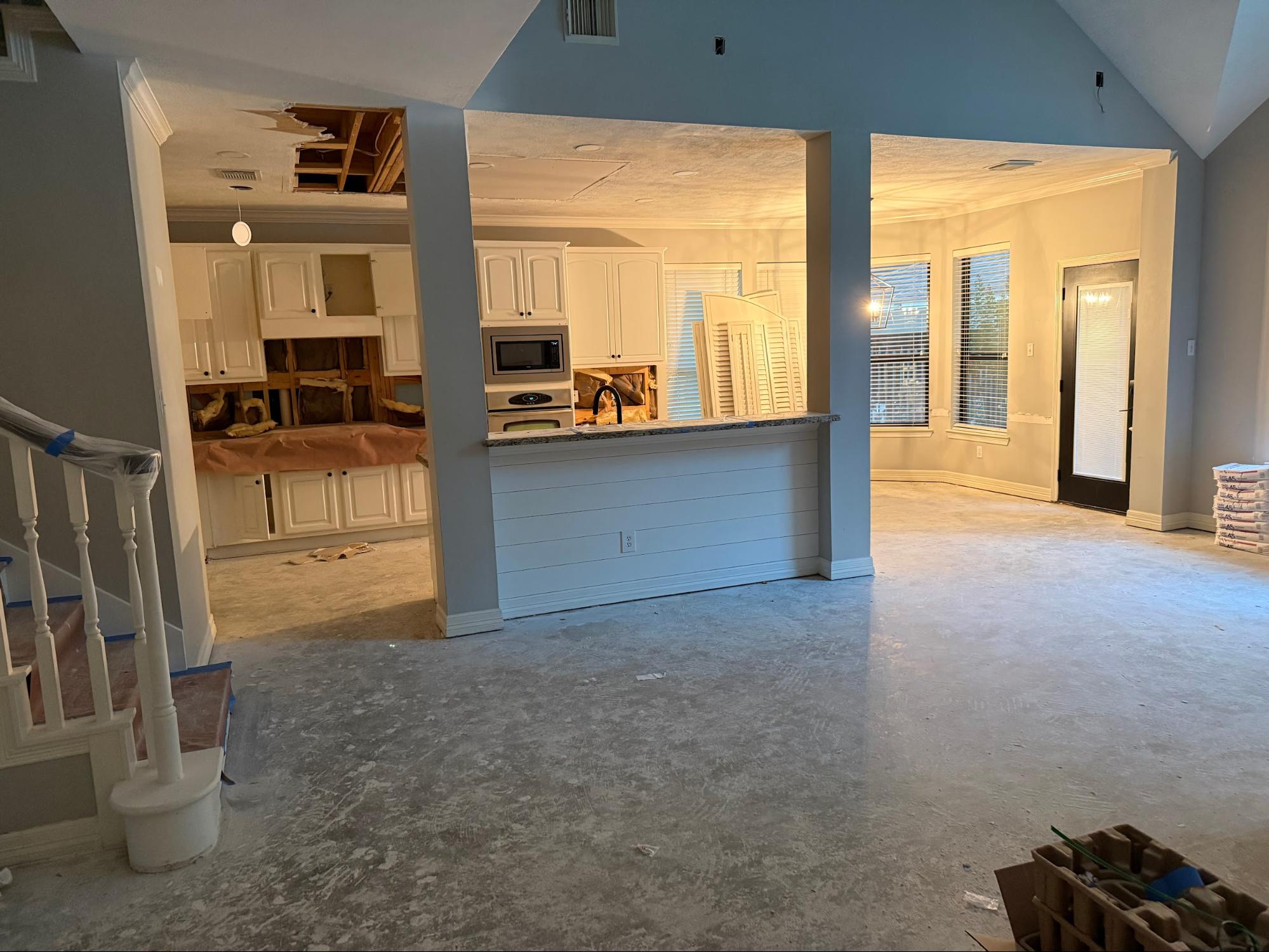
What Seismic Retrofitting Actually Does to Your Castle
Let's stay with the metaphor because it works perfectly here.
A castle's strength isn't just in its walls -- it's in how those walls CONNECT. To the foundation. To each other. To the towers and roof. When a siege engine hits the wall, the impact needs to travel through the entire structure and dissipate. If the connections are weak, the wall separates from the foundation, the tower pulls away from the wall, and the whole thing comes apart at the seams.
Your house works exactly the same way.
Seismic retrofitting isn't about making your walls thicker or your foundation heavier. It's about making the CONNECTIONS between your structural elements stronger, more flexible, and more capable of absorbing lateral force.
Think of it as upgrading your castle's armor -- not by adding weight, but by adding articulation. Modern armor moves with the body. Ancient plate armor that couldn't flex was actually MORE dangerous than chainmail that could, because rigid armor concentrated impact forces at weak points instead of distributing them.
Seismic retrofitting makes your house into chainmail: flexible, connected, and able to absorb force without breaking.
The Four Walls of Defense
Wall 1: Foundation Anchoring -- The Castle's Footings
In many pre-1990s Texas homes, the house literally SITS on the foundation without being bolted to it. The wood framing rests on the concrete slab or pier system, held in place by gravity and friction. During normal conditions, that's fine. During a seismic event, the house can slide OFF the foundation like a book sliding off a table.
The retrofit: Anchor bolts and hold-down brackets tie the framing to the foundation. The house and the foundation become ONE system instead of two pieces sitting on top of each other.
In castle terms: You're mortaring the stones. A dry-stacked wall (stones sitting on each other by gravity alone) survives gentle conditions. A mortared wall survives a siege.
Wall 2: Cripple Wall Bracing -- The Vulnerable Courtyard
If your Texas home has a crawlspace or pier-and-beam foundation, there's a section of short framing between the foundation and the first floor called the "cripple wall." These short walls are inherently weak against lateral forces because they're tall enough to buckle but not tall enough to resist racking.
In an earthquake, cripple walls are the first thing to fail. The short studs collapse sideways, and the first floor drops straight down onto the foundation. It's the castle equivalent of the gatehouse collapsing -- the strongest wall in the kingdom doesn't matter if the gate fails.
The retrofit: Structural plywood sheathing is added to the cripple walls, turning them from a series of individual sticks into a unified shear wall that resists lateral movement as a panel.
Cost vs. consequence: Cripple wall bracing is one of the most cost-effective structural upgrades you can make. A few hundred dollars in plywood and hardware can prevent tens of thousands in damage.
Wall 3: Shear Wall Reinforcement -- The Main Defenses
Your load-bearing walls don't just carry vertical loads -- in a seismic event, they need to resist HORIZONTAL forces too. A wall that was designed only for gravity loads (pushing straight down) can rack, twist, or separate from the floor and ceiling when hit with lateral force.
The retrofit: Adding structural sheathing, Simpson Strong-Tie connectors, or steel strapping to load-bearing walls converts them from gravity-only elements into shear walls that resist forces in multiple directions.
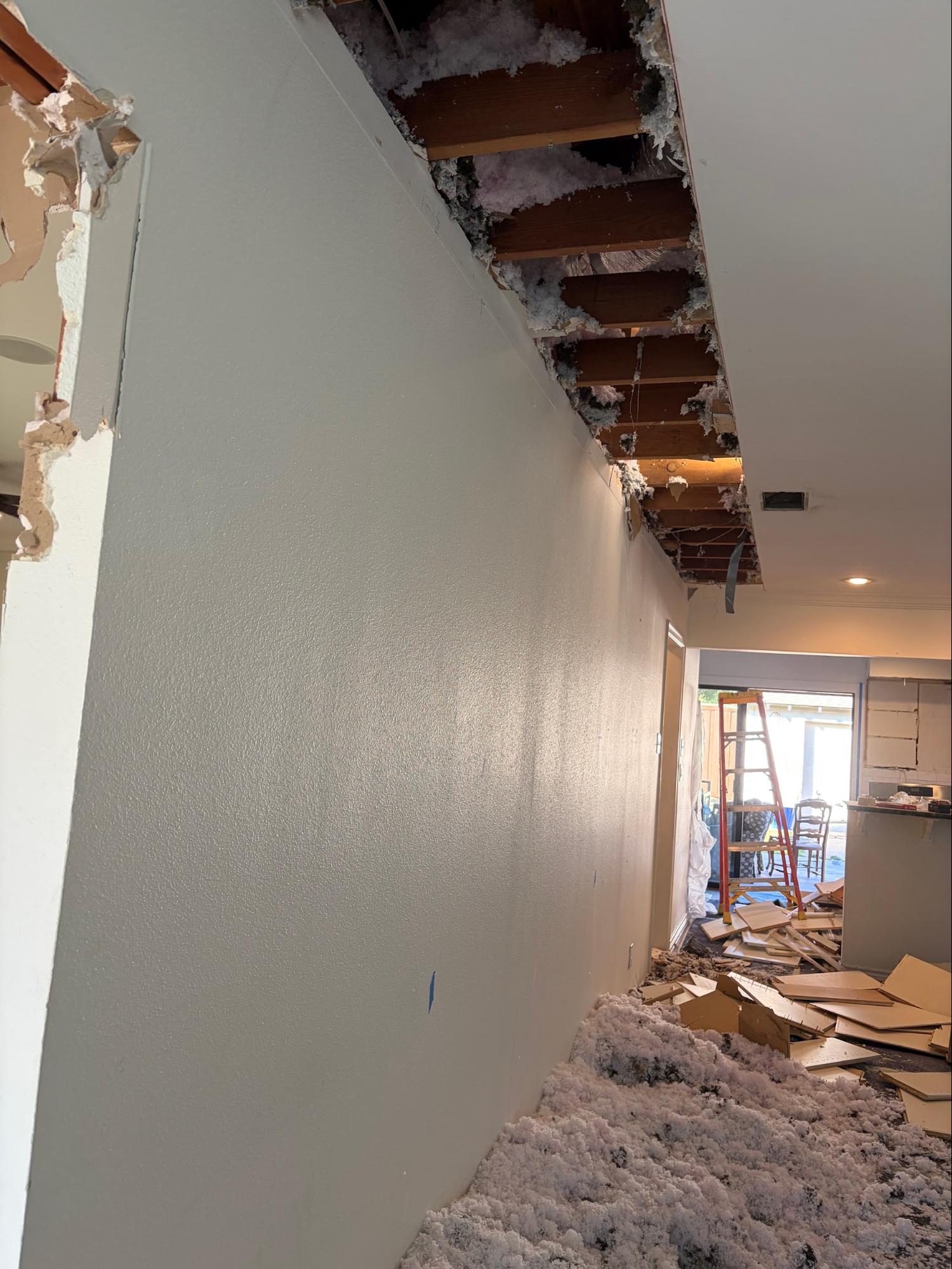
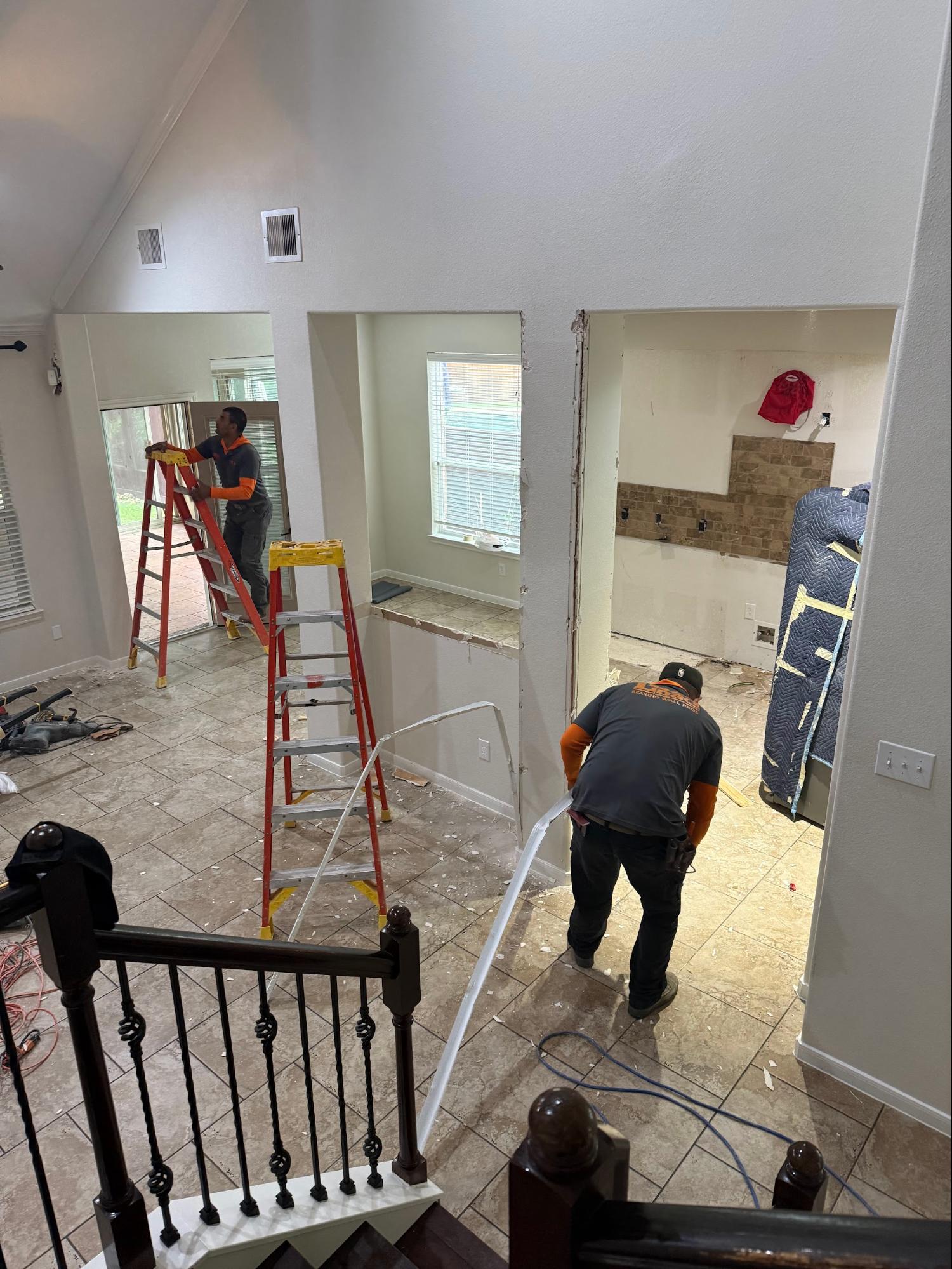
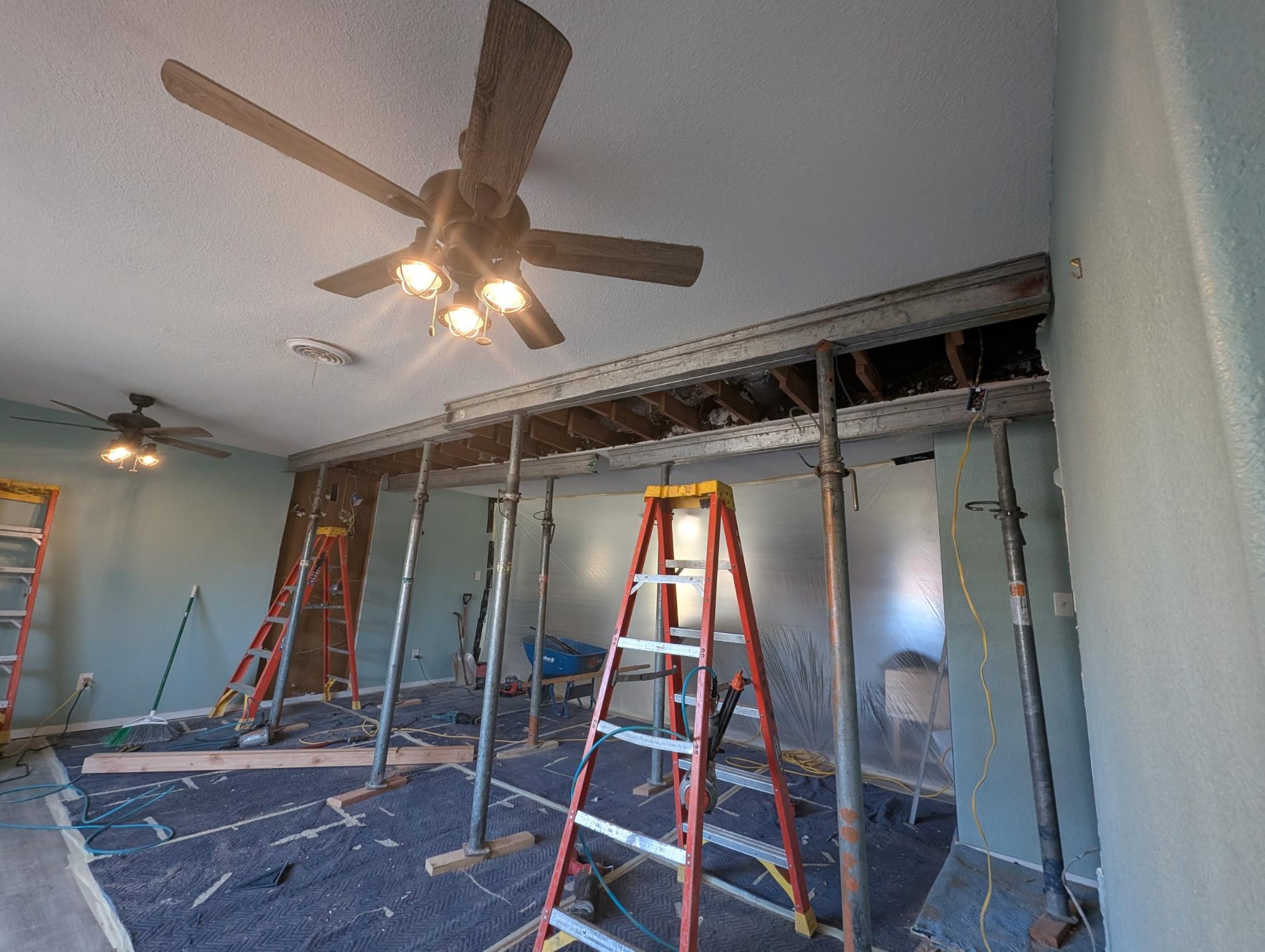
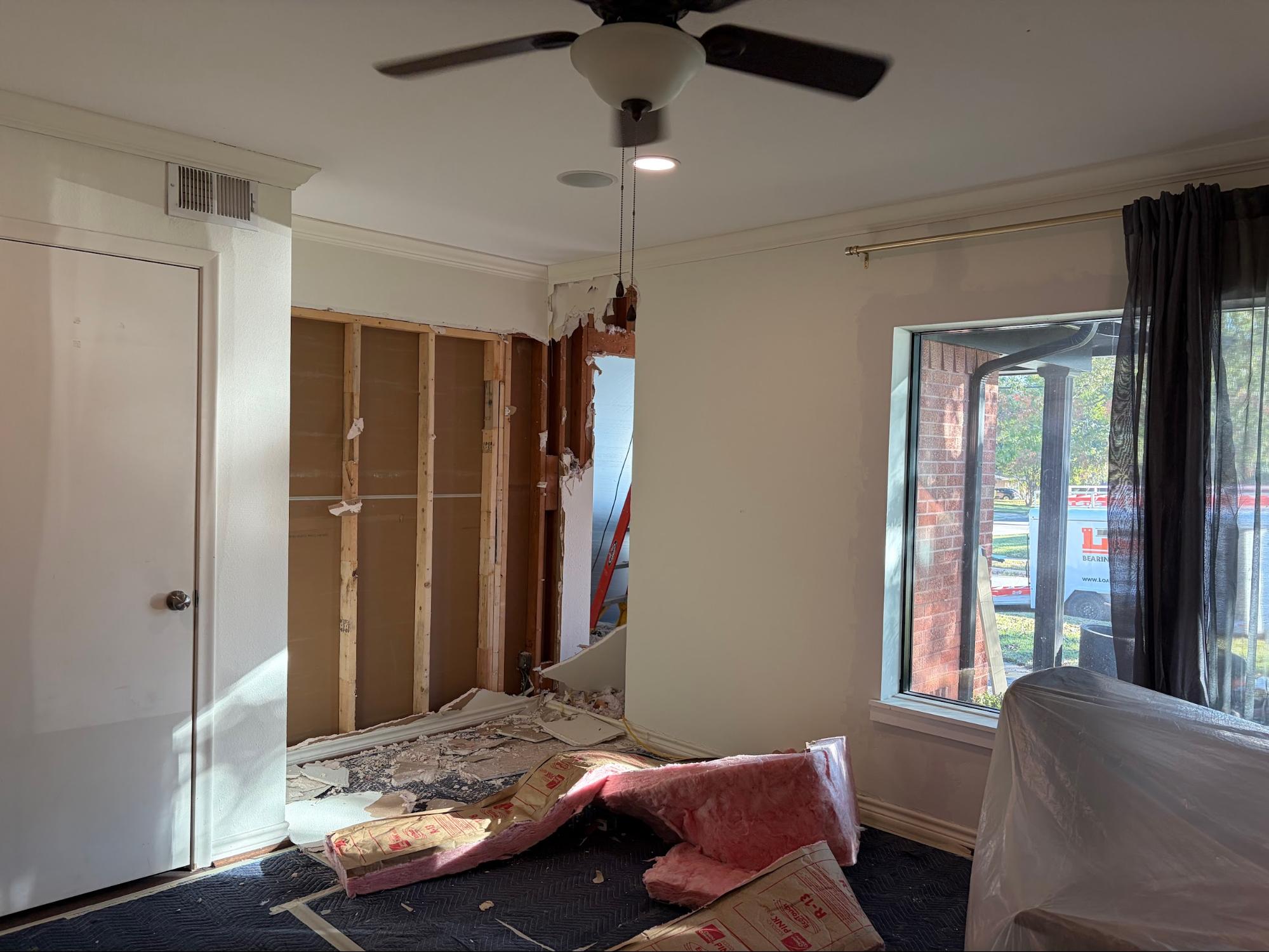
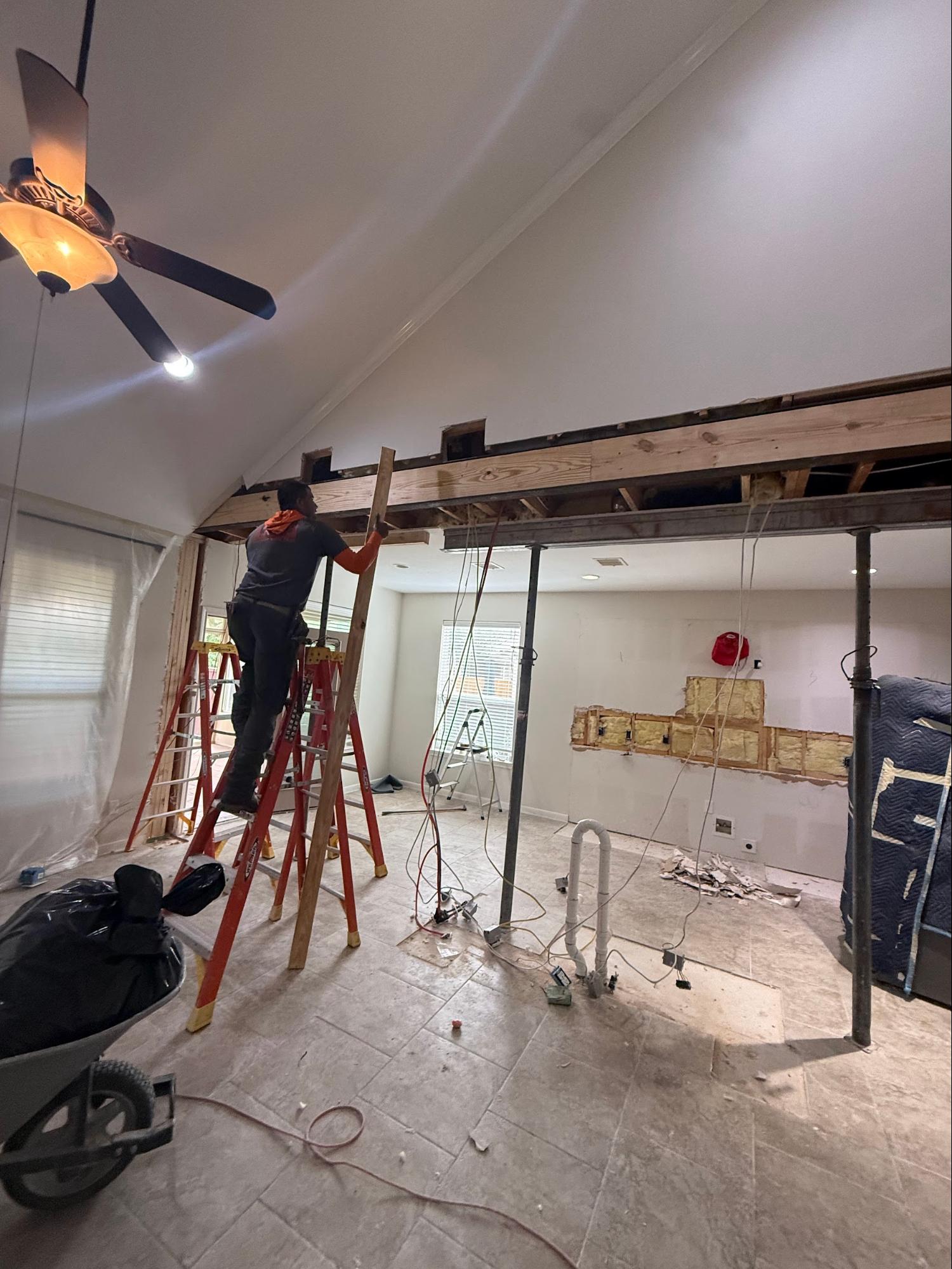
This is the big one for Texas homes undergoing wall removal. When you remove a load-bearing wall and install a beam, you have the perfect opportunity to upgrade the remaining walls and new framing to seismic-ready standards. The wall is already open. The framing is already exposed. Adding shear capacity at this stage costs a fraction of what it would cost as a standalone retrofit.
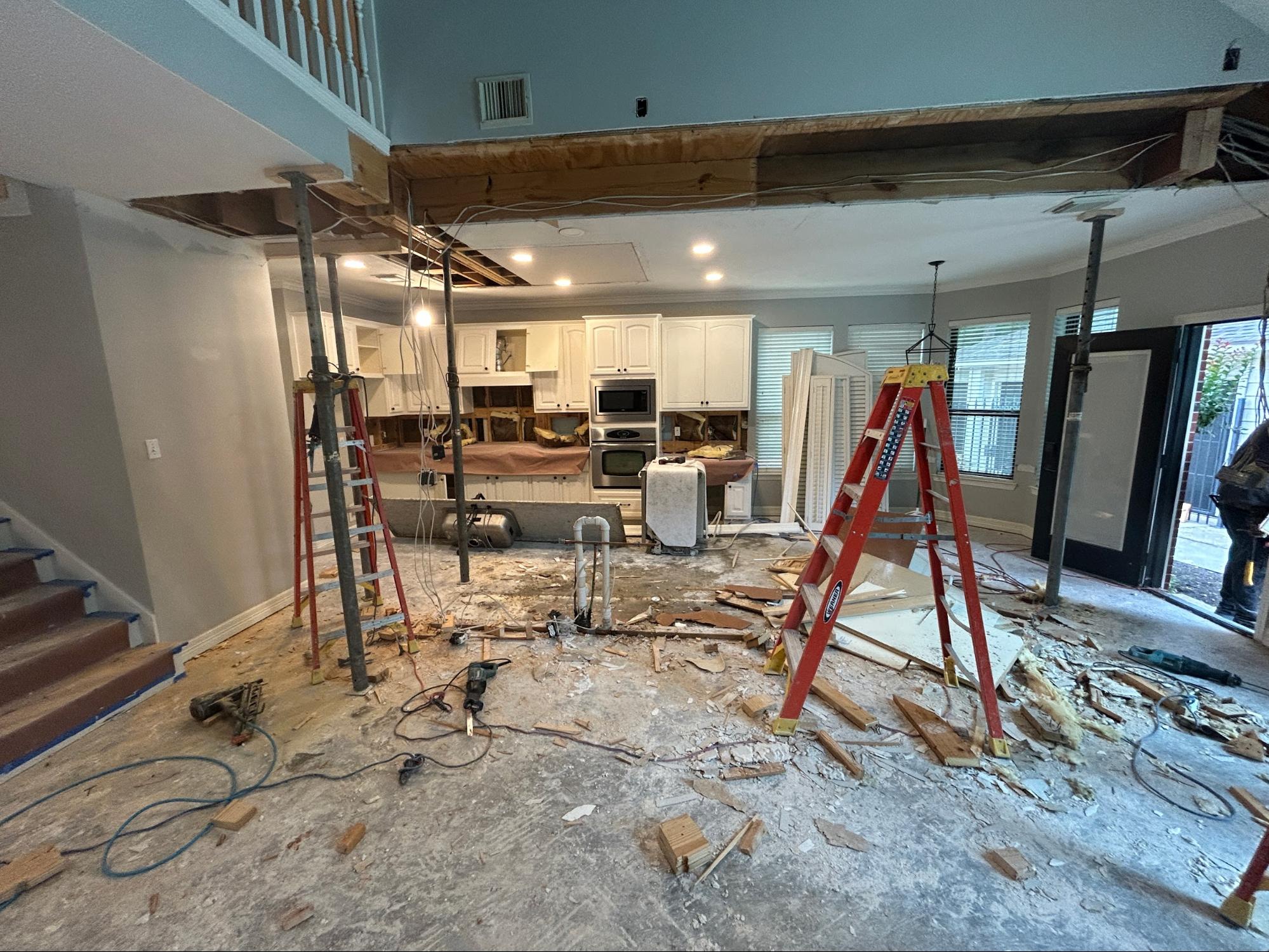
"We hired them to take out the two posts in the kitchen before we renovated. I'm so glad we chose them! They showed up on time and had the right support and materials to complete the job...." -- *Kristina Day, Houston *
### Wall 4: Roof-to-Wall Connections -- The Crown of the Castle
Your roof is heavy. In a Texas home, the roof assembly -- trusses, decking, shingles, possibly solar panels -- can weigh 15-25 pounds per square foot. In a seismic event, all that weight wants to keep moving in whatever direction the shaking started. If the roof isn't properly connected to the walls below, it can separate and the entire top of your house shifts.
The retrofit: Hurricane clips and seismic ties connect each truss or rafter to the wall below. These small metal brackets cost a few dollars each and take minutes to install, but they're the difference between a roof that stays connected and a roof that peels off.
Fun Texas fact: Hurricane clips are already required by code in most Gulf Coast counties. But they're NOT universally required in North Texas or Central Texas. If your DFW or Austin home was built before the late 2000s, there's a decent chance your roof-to-wall connections are toenails only -- three nails holding each truss to the top plate. That's the castle equivalent of hanging your crown from a thread.
Why Wall Removal Is the Perfect Time to Retrofit
Here's the opportunity most homeowners miss: when you're already opening walls for a beam installation, the framing is EXPOSED. The connections are VISIBLE. The foundation interface is ACCESSIBLE.
Adding seismic retrofitting during a wall removal project costs a fraction -- sometimes as little as 10-15% more -- of what a standalone seismic retrofit would cost, because the expensive part (opening walls, exposing framing, accessing foundation connections) is ALREADY DONE.
At Load Bearing Wall Pros, we see this opportunity on every project. When we remove a wall and install a beam, we're already:
- Exposing the framing on either side of the opening
- Working at foundation and ceiling connections
- Installing new structural members with engineered connections
- Coordinating with a Professional Engineer who's already analyzing the load paths
Adding seismic upgrades at this stage is like upgrading your castle's armor while the blacksmith is already at the forge. The fire's hot. The tools are out. The only cost is a few more hours of work and some additional hardware.
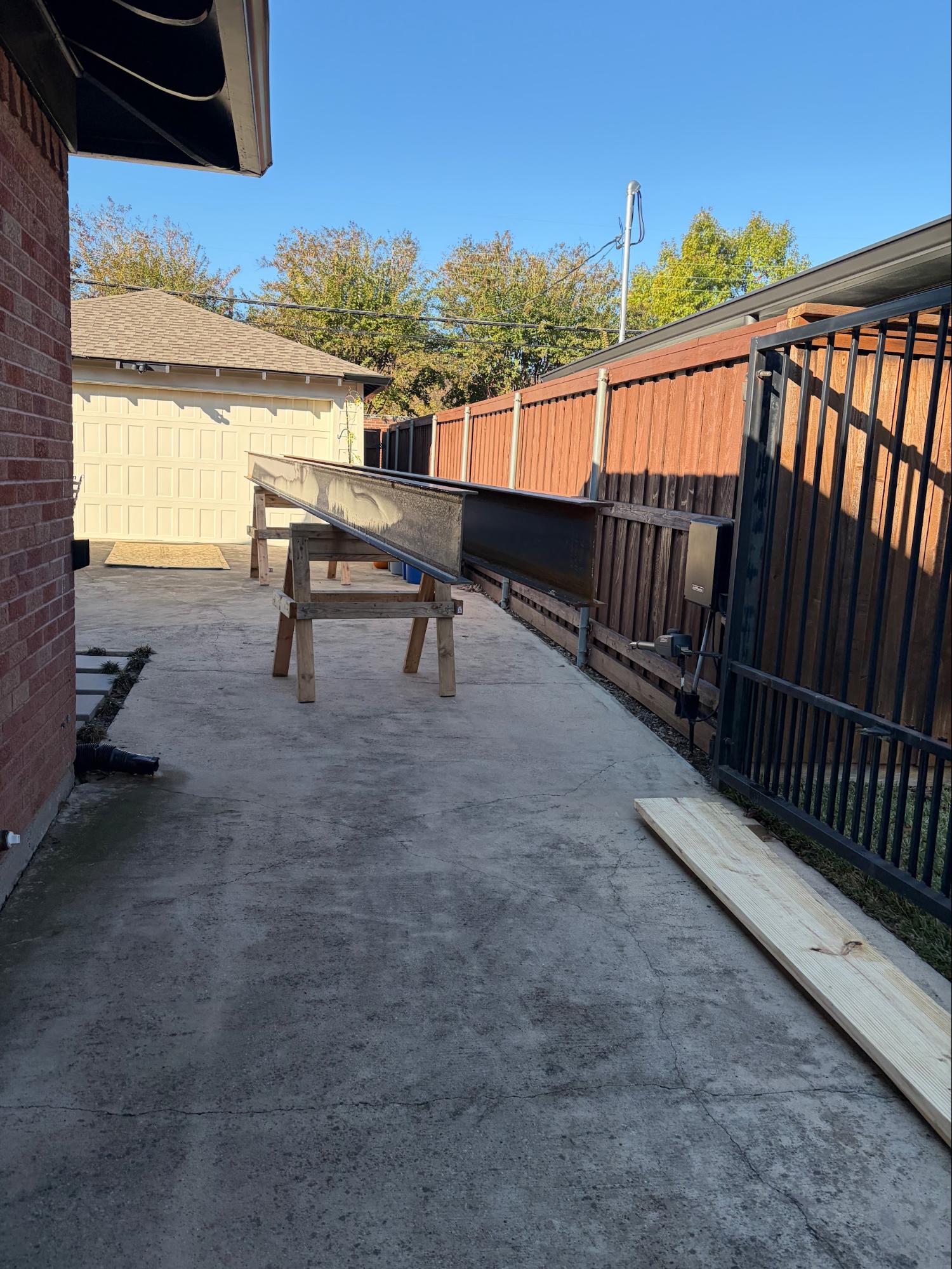
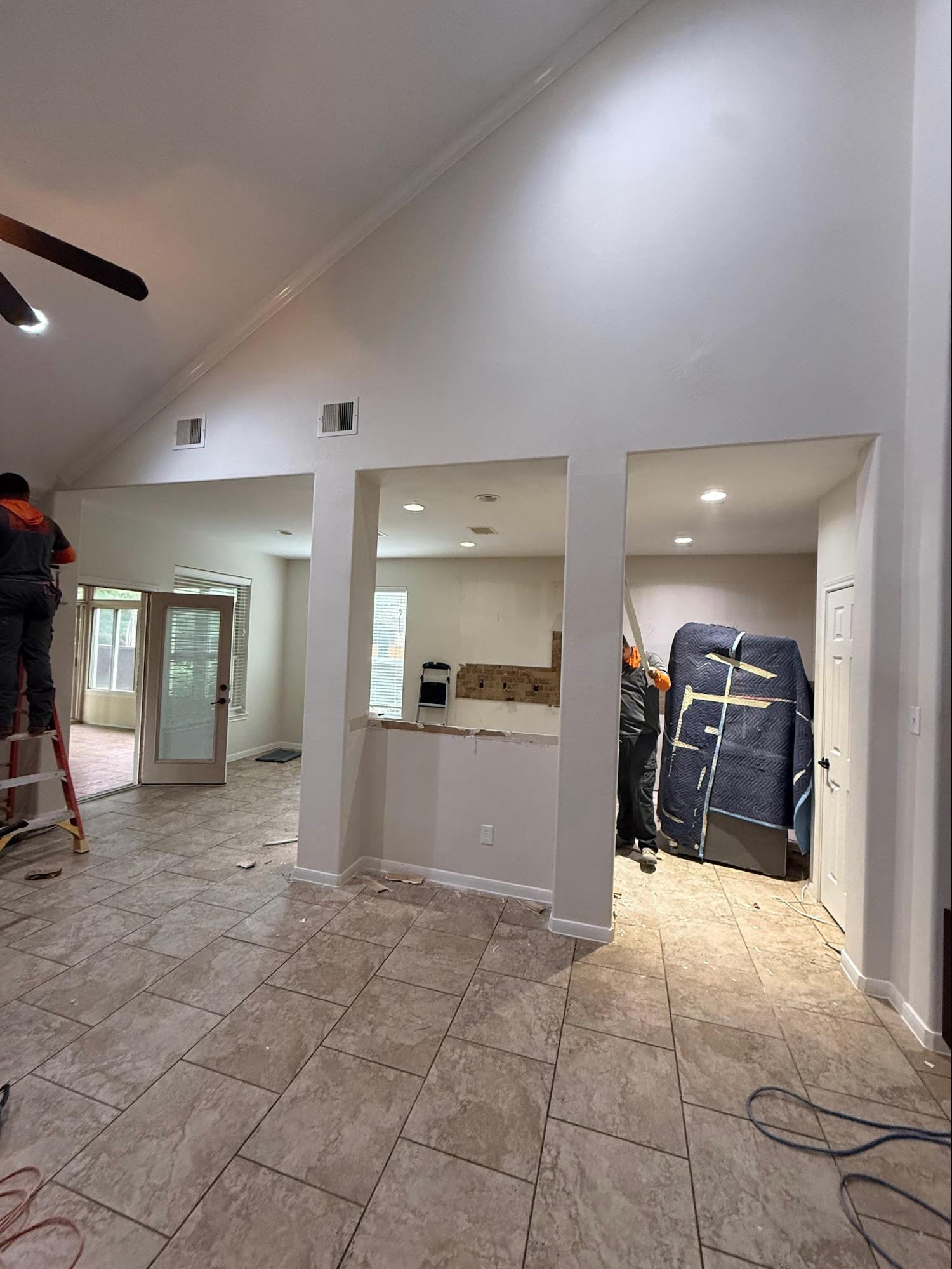
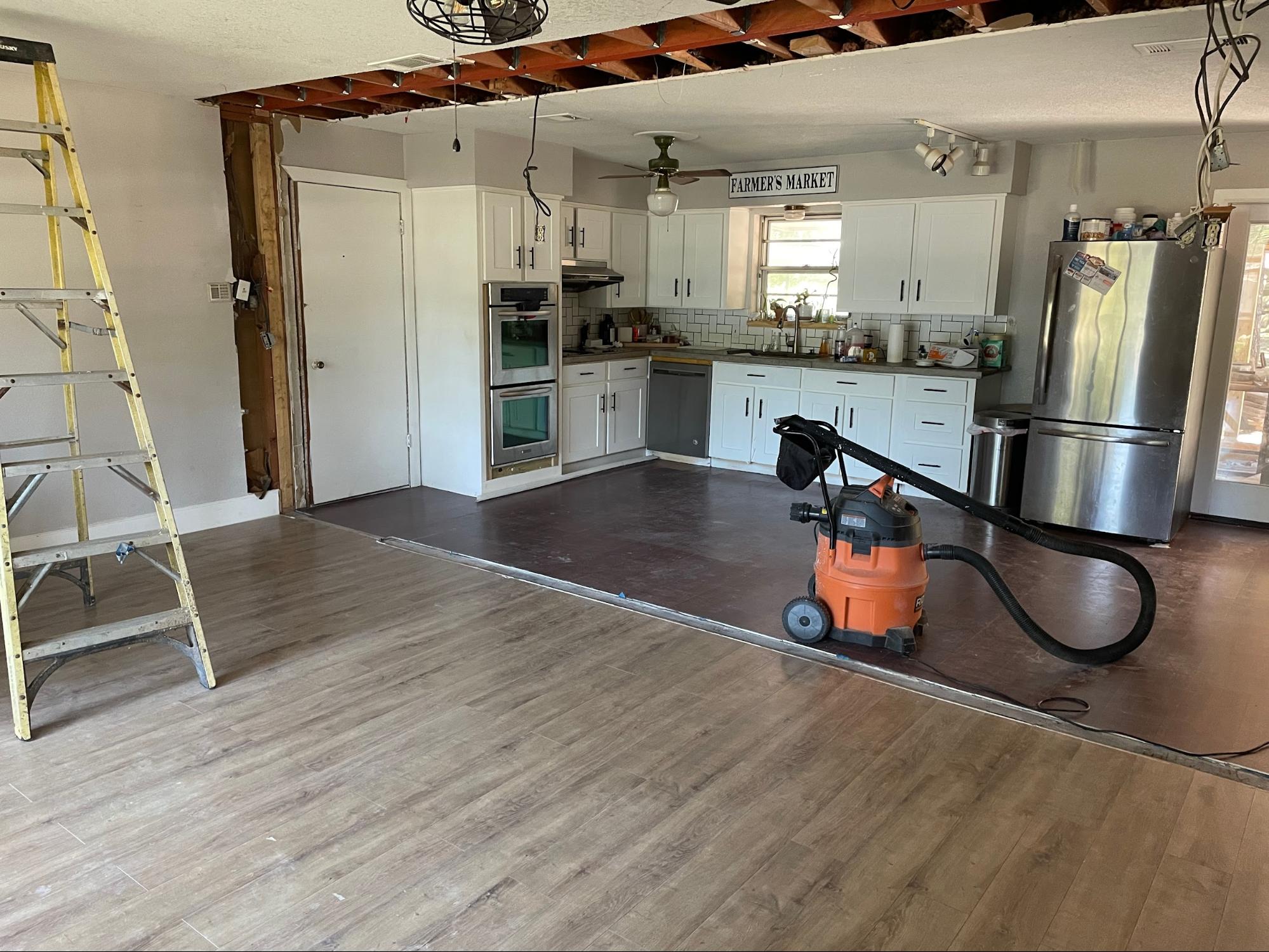
"25-foot wall removed between living and kitchen. They were on-time and quick! Noticed that some of the supports weren't flush after they had already left -- they came right back out and fixed it." -- L B
The Texas Seismic Map: Know Your Risk
Not all parts of Texas face equal seismic risk. Here's the landscape:
DFW Metroplex -- Moderate Risk. The Barnett Shale region has produced the most induced seismicity in Texas. Cities like Irving, Azle, and Venus have experienced noticeable earthquakes. Homes in this area built before 2000 are the most likely to benefit from retrofitting.
Austin / Central Texas -- Low to Moderate Risk. The Balcones Fault Zone runs through Central Texas, and while major earthquakes are rare, the geological conditions create risk for older structures. Homes on pier-and-beam foundations in this area are particularly vulnerable to lateral movement.
Houston / Gulf Coast -- Lower Seismic, Higher Wind. Houston faces less seismic risk but MORE wind risk (hurricanes). Many of the same retrofitting techniques -- hurricane clips, foundation anchoring, shear walls -- address both threats. If you're retrofitting for wind, you're halfway to seismic readiness.
West Texas -- Variable Risk. Areas near the Permian Basin have seen increased seismic activity due to injection wells. Midland-Odessa homeowners should be aware.
What a Seismic Retrofit Costs (And What Skipping It Costs)
Foundation anchoring: $500-$3,000 depending on home size and foundation type
Cripple wall bracing: $1,000-$5,000 depending on crawlspace size
Shear wall reinforcement: $2,000-$8,000 depending on how many walls and accessibility
Roof-to-wall connections: $500-$2,000 for a typical home
Total standalone retrofit: $3,000-$15,000
Added to a wall removal project: Often 10-30% of those costs because the walls are already open
Cost of NOT retrofitting: Foundation repairs average $5,000-$15,000. Structural wall repairs run $10,000-$50,000. And insurance? Standard Texas homeowner's policies typically EXCLUDE earthquake damage. You're uninsured for the exact event you're trying to prevent.
The math isn't complicated. A few thousand during construction versus tens of thousands after a seismic event -- with no insurance backstop.
The LBWP Approach
We don't install seismic retrofits as a standalone service -- that's a specialty contractor's domain. But when we're already inside your walls for a beam installation, we flag opportunities for seismic upgrades and coordinate with your engineer to include them in the project scope.
Our in-house Professional Engineer, Mateo Galvez, reviews every project's structural requirements. When seismic considerations make sense for your home's location, age, and construction type, we include recommendations in the engineering package.
12,000+ structural projects since 2015. Every one started with understanding the forces at play -- not just gravity, but the lateral forces that most Texas homes were never designed to handle.
Frequently Asked Questions
Does Texas really have earthquakes?
Yes. The USGS has recorded thousands of seismic events across Texas since 2008, primarily in the DFW area, West Texas, and along the Balcones Fault Zone. Most are small (2.0-4.0 magnitude), but they're real and they stress residential structures.
Will my homeowner's insurance cover earthquake damage?
Usually not. Standard Texas homeowner's policies typically exclude earthquake damage. Separate earthquake insurance is available but rarely purchased.
Is my home at risk if it was built after 2000?
Modern construction practices and updated building codes make newer homes more inherently resistant to seismic forces. However, they may still lack specific seismic connections that could be added during a wall removal project.
Can I retrofit my home without removing any walls?
Yes, but it's more expensive because you have to open walls specifically for the retrofit work. If you're already planning a wall removal, that's the ideal time to add seismic upgrades.
How do I know if my foundation is bolted?
In a pier-and-beam home, look in the crawlspace for anchor bolts connecting the sill plate to the foundation. In a slab-on-grade home, a structural engineer can assess the connection type during an evaluation.
Is seismic retrofitting required by code in Texas?
Currently, no. Texas residential building codes don't require seismic retrofitting for existing homes. It's a voluntary upgrade -- but a smart one for homes in active zones.
---
What Our Customers Say
⭐️⭐️⭐️⭐️⭐️ *"This company is the best!!!
---
Your castle deserves armor. Schedule your free onsite estimate and let's talk about fortifying your home's structure during your next project.
Load Bearing Wall Pros | 12,000+ walls removed since 2015 | 4.9★ from 1,100+ reviews
DFW: 469.813.8143 | Houston: 713.322.3908 | Austin: 512.641.9555